 Cargo Window
Plan what flies to the Moon and Mars.
Miss the ship to Mars and the next one leaves in 26 months. Cargo Window decides what goes on every rocket, survival first, and shows who goes short before launch, not after the ship lands without it.
No sign-up. The console opens on an example day: 2 May 2035.
26 months
between launch windows to Mars
7 months
for cargo to get there
44 minutes
for a question and its answer
0 spare rockets
when a flight is full
The problem
One rocket. More cargo than room.
On Earth a missed truck costs a day. Off Earth it can leave a crew without a spare part for two years, and today nobody sees it coming.
Fixed room
Every rocket carries a set mass and volume, and more cargo is waiting than any flight can take.
Rare windows
The Moon has a flight every few weeks. Mars lines up every 26 months, so a bumped load can mean two years without it.
A slow link
Messages to Mars take up to 22 minutes each way. Every back-and-forth costs the crew time.
How it works
AI reads and writes. Rules decide. People approve.
Three steps, the same ones you'll find in the console.
Step 1
Turn a request into a booking
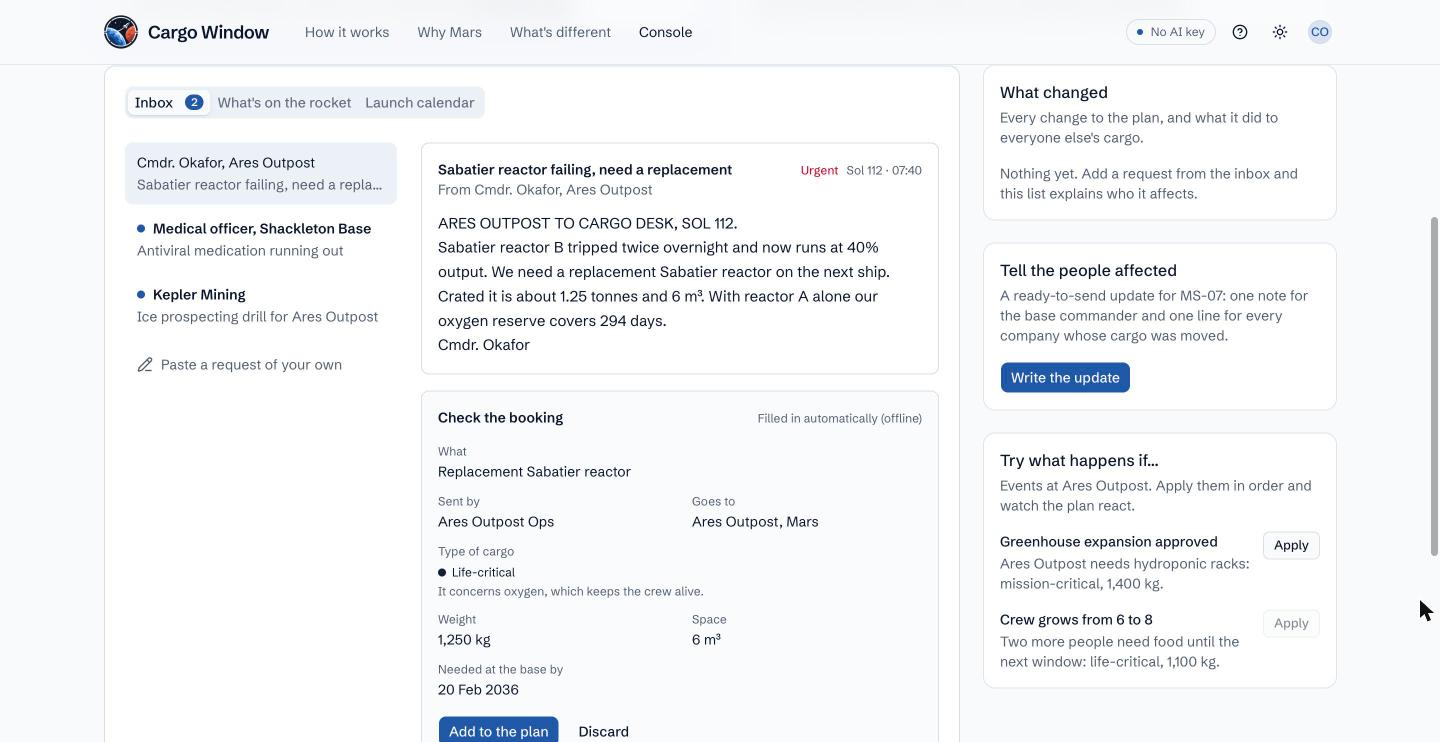
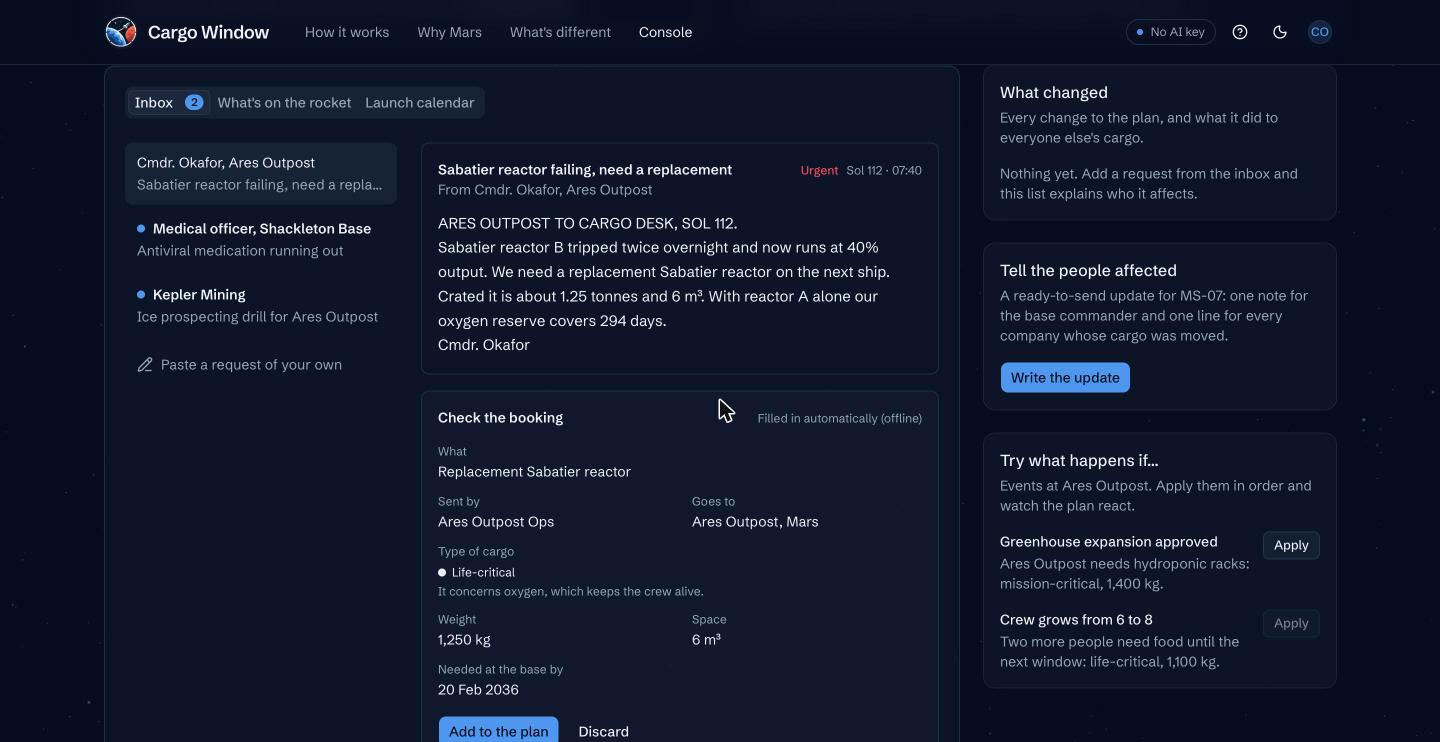
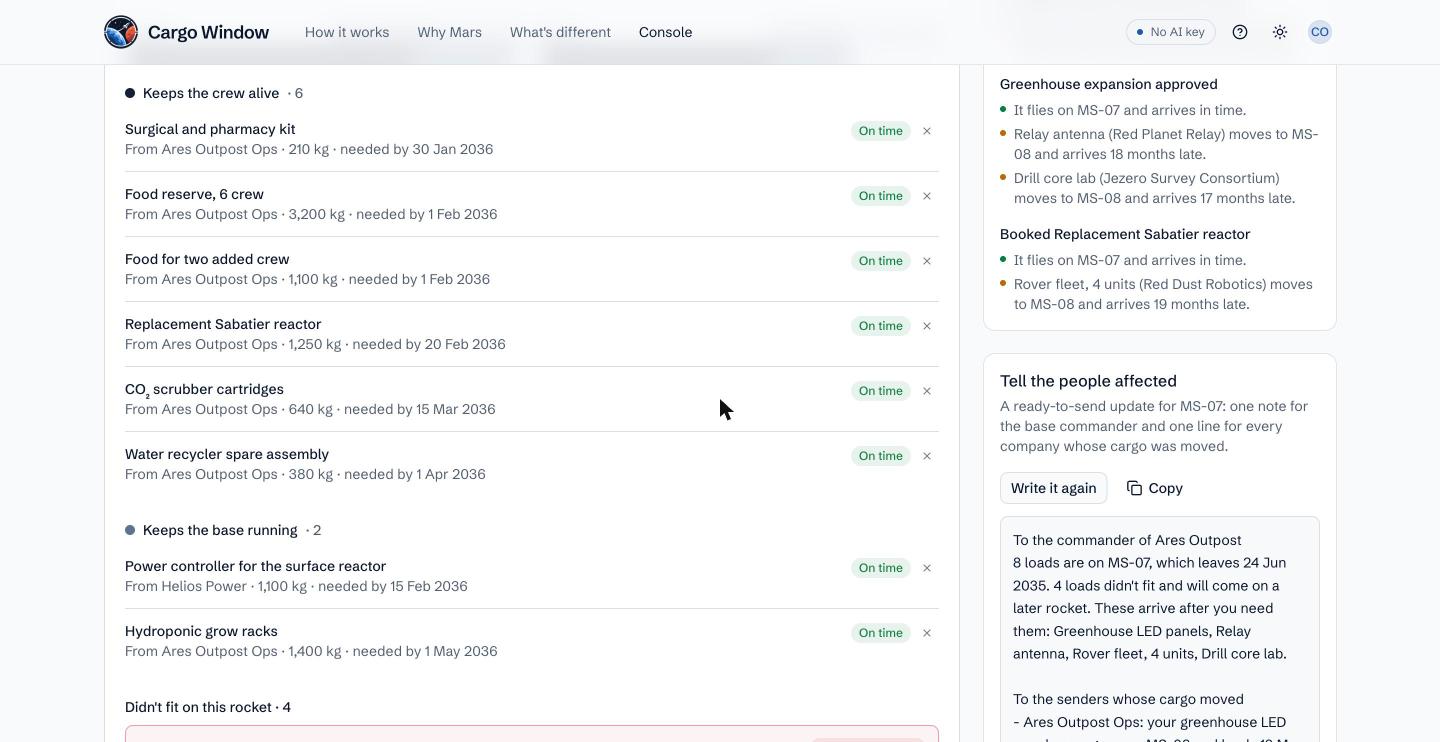
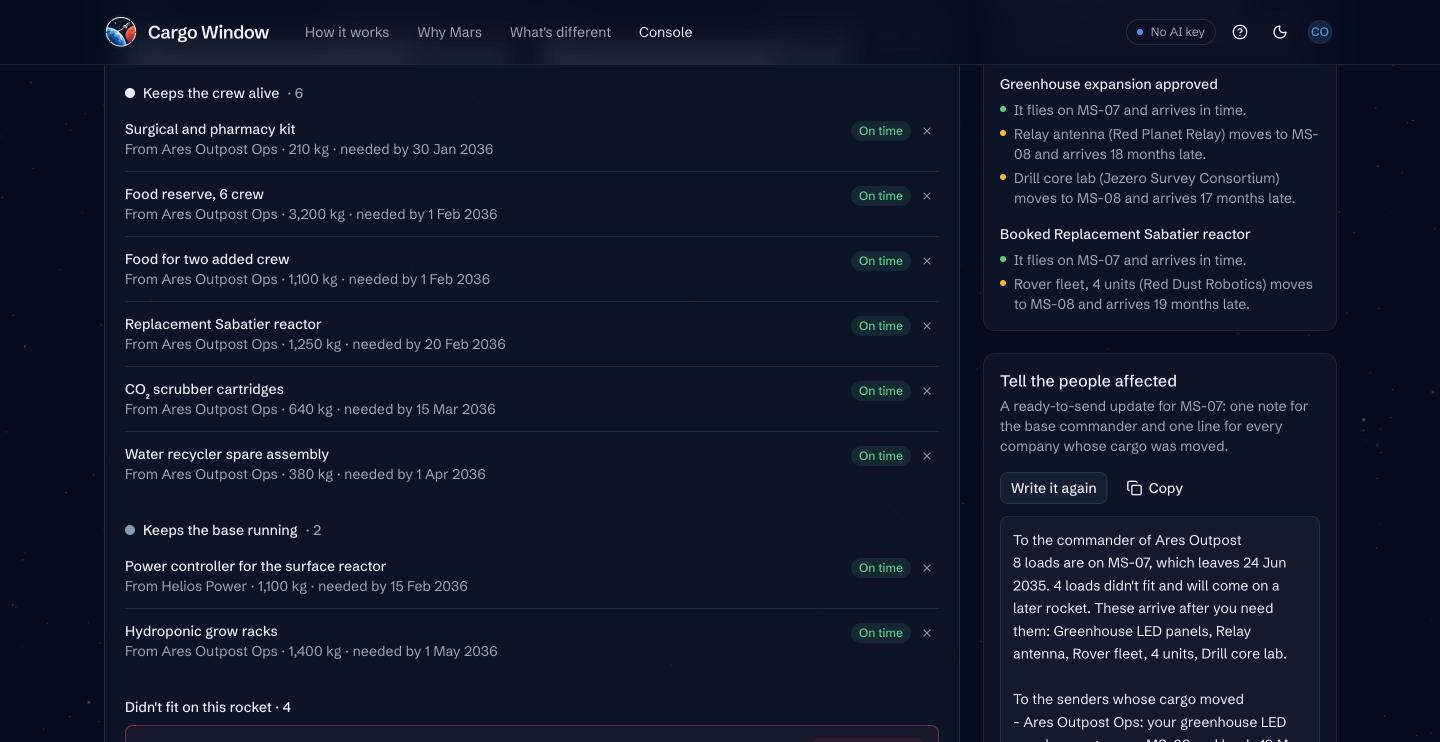
A crew writes what they need in plain words. Claude turns the message into a booking draft, works out when the base runs out, and lists every missing detail in one reply.
- Nothing is guessed: missing numbers block the booking
- A cargo officer checks every booking
Step 2
Pack every flight by fixed rules
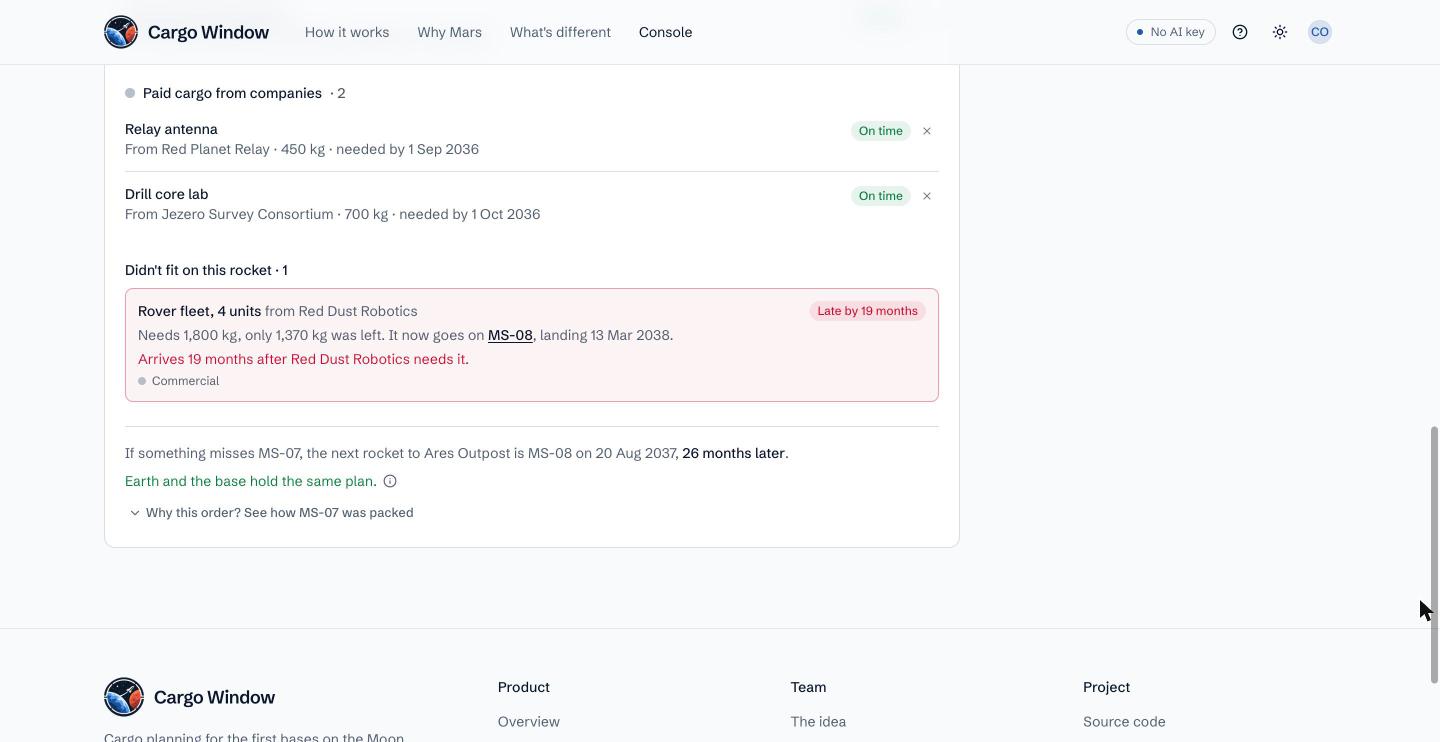
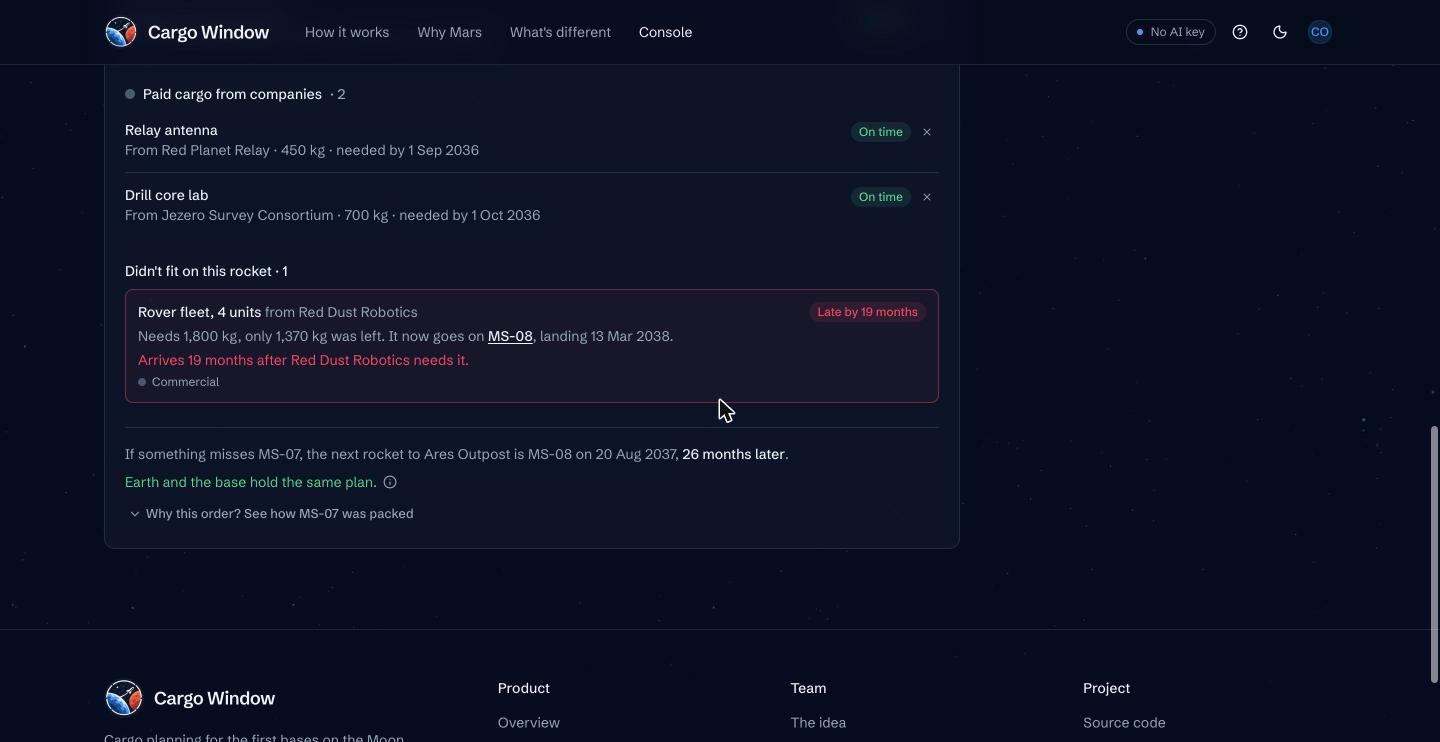
Life-critical cargo flies first, then what keeps the base running, then commercial cargo by bid. A load that doesn't fit moves to the next flight, with the reason shown.
- Money only orders commercial cargo
- The same bookings always give the same manifest
Step 3
See who goes short, and tell them
Every load is checked against the date its base needs it. Late loads turn red months before launch, and Claude drafts the note to the commander and every shipper affected.
- Measured in days a base goes without
- Updates use the planner's numbers only
Why Mars changes everything
To the Moon a bumped load waits four weeks. To Mars, two years.
The real launch calendar of the example scenario. Click any launch to open its manifest in the console.
What's different
A cargo plan you can trust from two planets away
Measured in days without
A manifest is judged by how long a base goes short, not by kilograms carried or money earned.
Money can't outrank survival
Bids only order commercial cargo. Air, water, food and medicine always fly first.
Two planets, one plan
Earth and a base compute the same manifest on their own and confirm it with an 8-character fingerprint.
Built for delay
One message in, every missing question out at once. The planner keeps working when the link is down.
Run the cargo desk on 2 May 2035
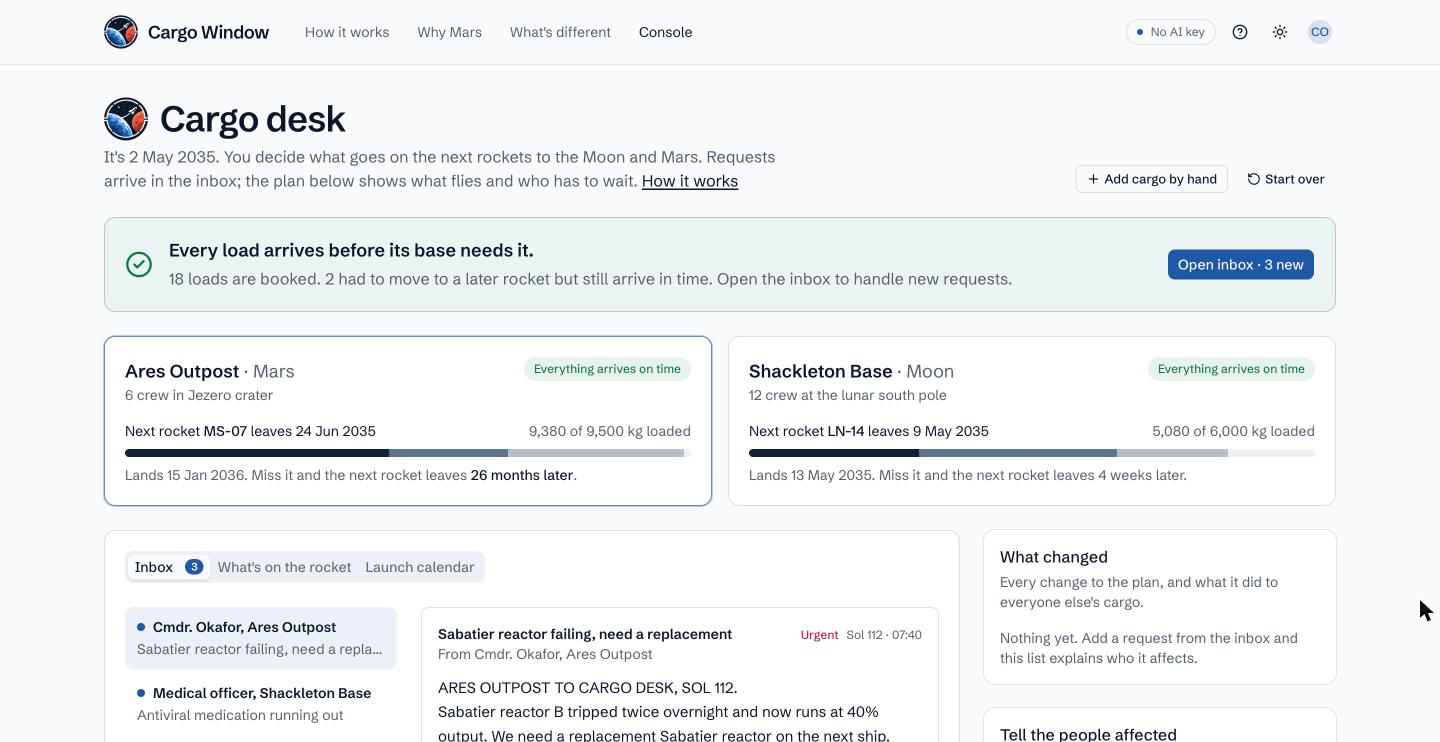
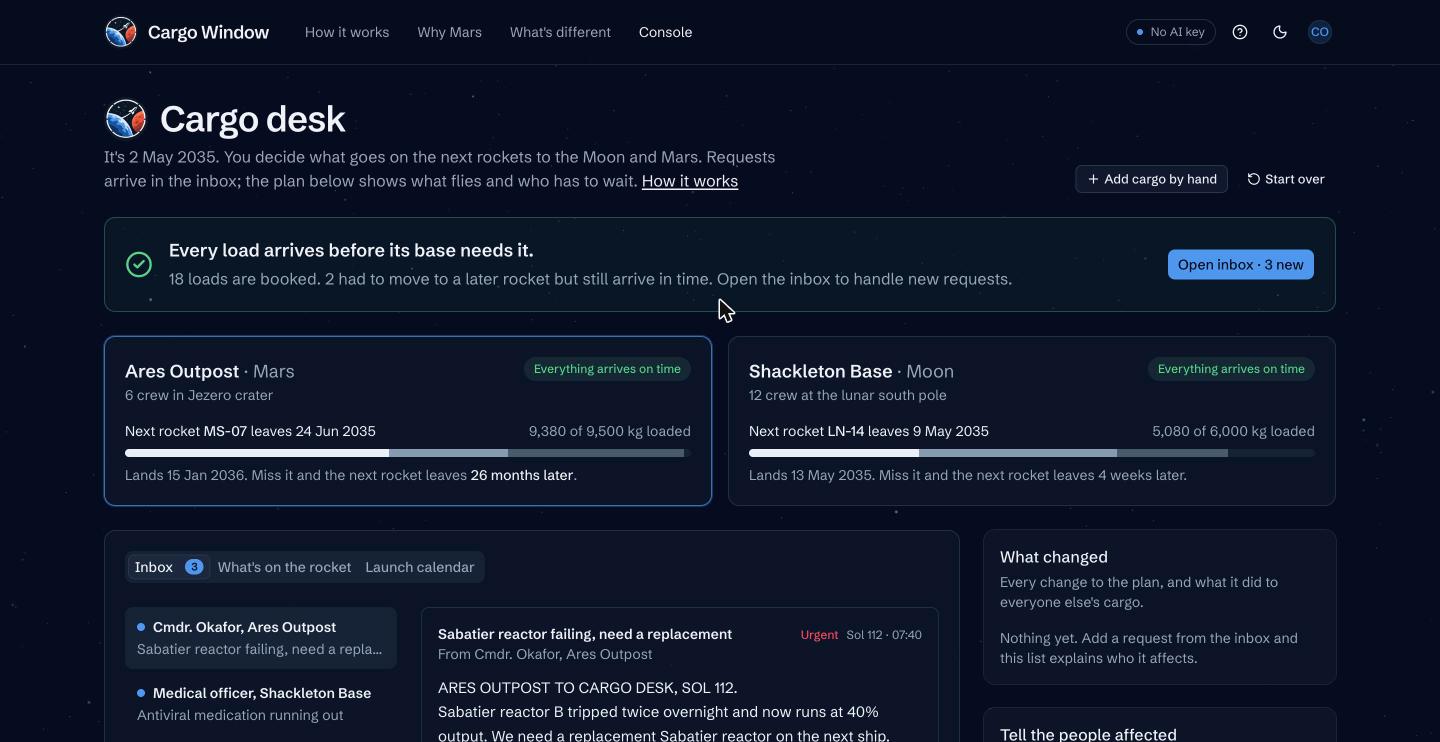
A Moon base, a Mars outpost and two crowded rockets. Turn an urgent request from Mars into a booking, add it to the plan, and see who has to wait and what it costs them.
Open the console